Development and Ontogeny of the Enari
This section describes the development of an Enari individual from early brood growth to advanced age. The focus is not only on growth and maturation, but also on how a five-sex system remains biologically stable even though many secondary differences emerge comparatively late.
Guiding principles
Enari ontogeny is shaped by two core principles:
- Primary traits are morphologically present from hatching onward.
- Secondary traits unfold gradually and only become clearly distinct during the pubertal window.
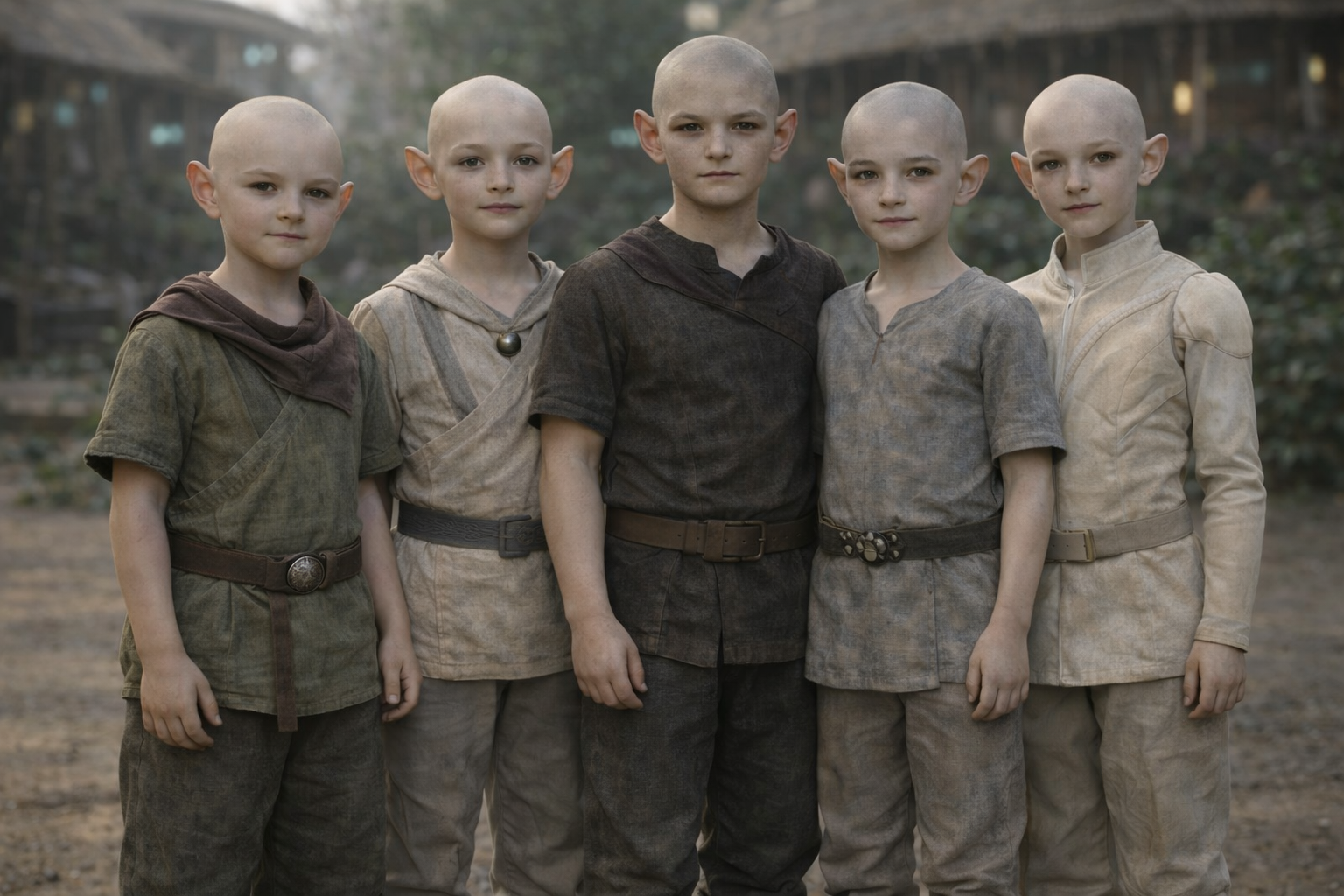
As a result, Enari children can be assigned to a sex early on, while remaining outwardly similar for a long time.
Documents
- 01_Grundprinzipien.md: terminology, developmental logic, and species-specific constants
- 02_Lebensphasen.md: hatching, childhood, puberty, adulthood plateau, and aging
- 03_Geschlechtsspezifische_Ontogenese.md: how the five sexes differentiate across the life course
Cross-connections
The early developmental environment is detailed under brood capsules, brood development, and brood centers. Visible developmental markers such as skin film, pattern contrast, and proportional signature are closely linked to phenotypics and clusters.